

In a Pietà, Mary holds Jesus after his death. These ten AI-created works explore the scene through drapery, gesture and landscape, from a wide view beneath blue skies to an intimate image of the embrace.
What does the Pietà represent?
The image belongs to Christian devotional tradition. John 19:25 places Mary beside the cross and John 19:38–42 describes Jesus’ burial. The familiar pose of Mary cradling her son draws those moments together in a scene of grief and care. Luke 2:35, where Simeon speaks of a sword piercing Mary’s soul, is another passage readers often bring to the image.
Look at the hands before the faces
Follow the hand that supports Christ and the line of the shroud. These details tell you how the figures share the space. The background can then change the pace of looking. An open landscape encourages the eye to roam, while a dark mantle or a close crop keeps it near the embrace.
1. Christ across the Continuous Ivory Drapery
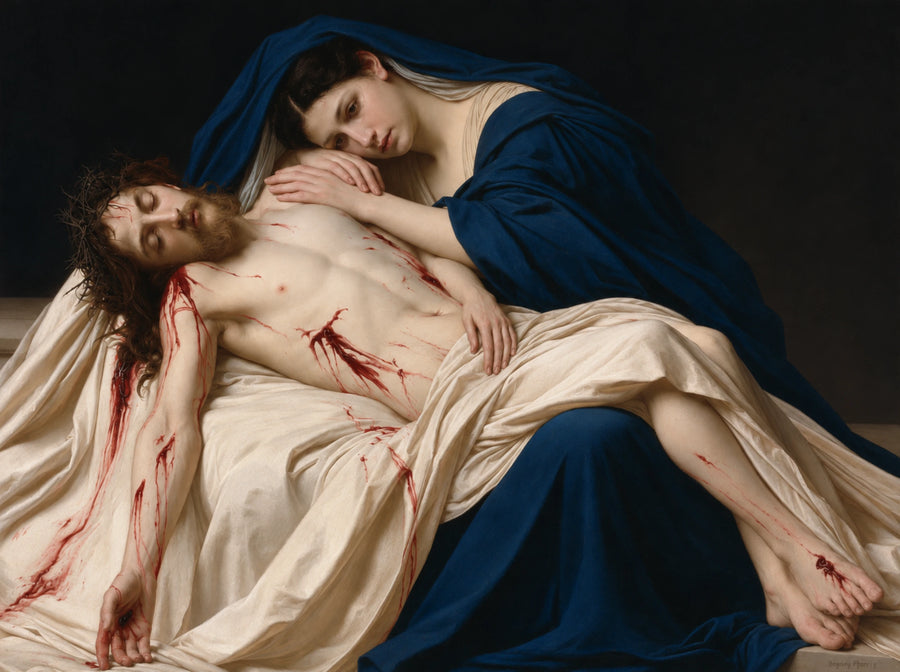
The continuous ivory cloth links the two figures across the composition. Look at how its folds carry the eye from the place where Mary supports Christ to the outer edge of the picture.
2. The Blue Mantle and the Falling Arm
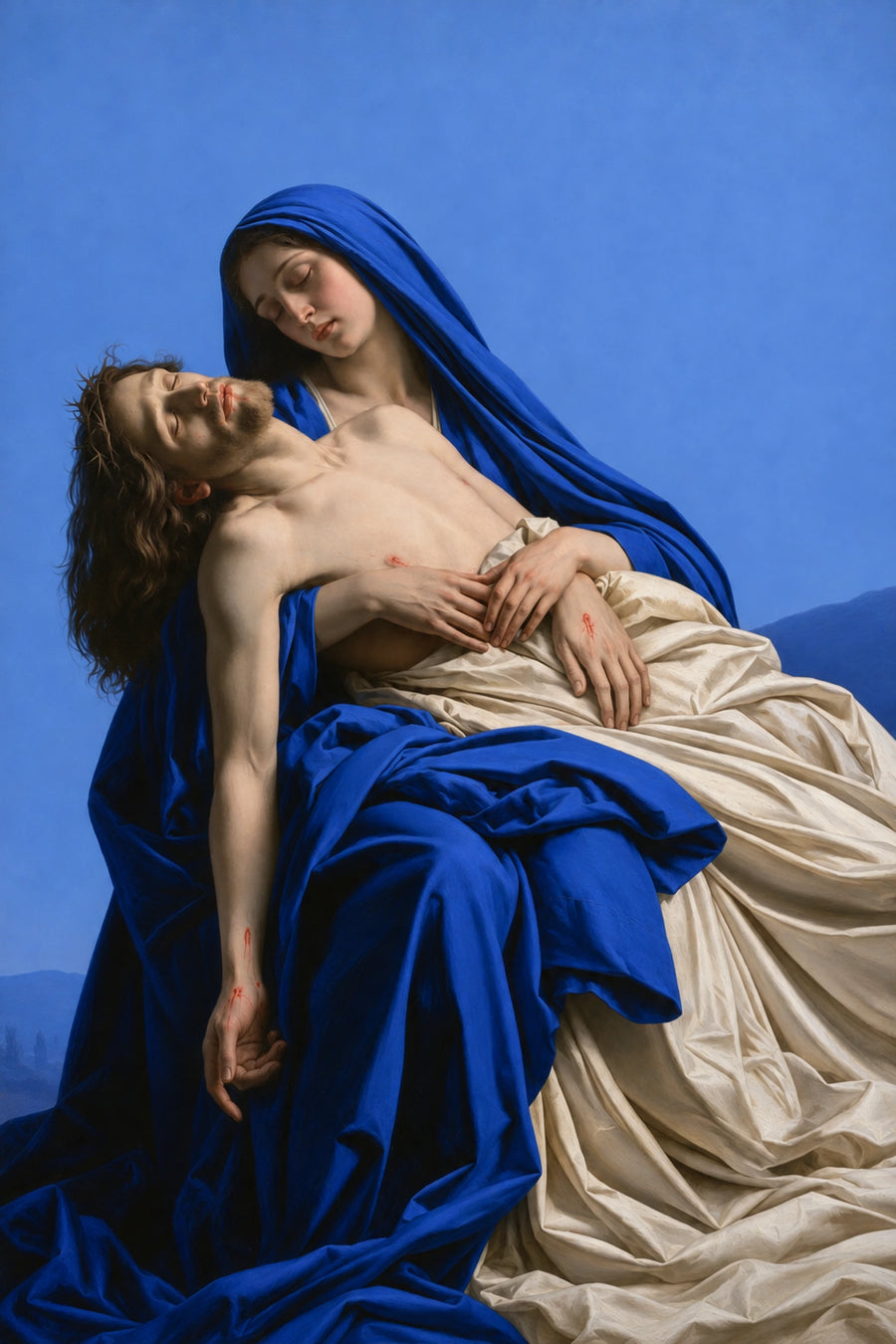
The falling arm introduces a downward movement against the shape of the blue mantle. That contrast gives a simple visual indication of weight.
3. Mary beneath the Unbroken Blue Sky
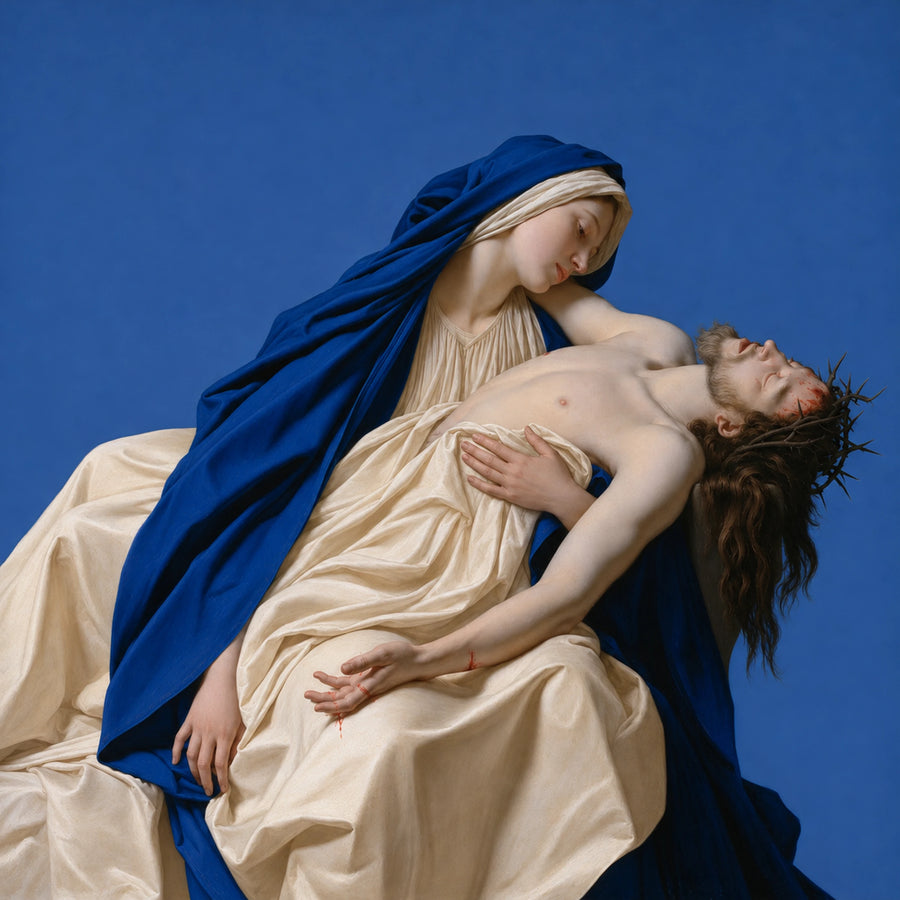
The unbroken sky leaves space around the encounter. Compare the amount of open blue here with the close embrace at the end of the list to see how the setting changes the distance you feel from the figures.
4. The Garden Vigil beneath the Distant Hills

The distant hills widen the scene. The view offers two places to rest your gaze, first in the quiet landscape and then at the point where Mary supports Christ.
5. The Upright Lament in Cobalt and Ivory

The upright arrangement gives the composition a different balance. Follow the folds of the cobalt and ivory fabrics to see how they guide the eye through the vertical image.
6. The Wounded Christ beneath Mary’s Veil

Notice how the veil directs attention to Mary’s face and then back to Christ. This close relationship can remain legible at a modest size.
7. The Ashen Christ beneath the Midnight Mantle

The midnight palette favors slow viewing. Check how clearly the edges of the mantle and face remain visible in the shadows before choosing a print for a dim room.
8. The Outstretched Arm across the Blue Field

The outstretched arm takes the eye outward, while the blue field holds the scene together. Check the edges in the preview if you are fitting the work to a frame you already own.
9. The Crowned Head upon the Ivory Shroud

The crown recalls the earlier mockery in the Passion account. The ivory shroud brings attention to the aftermath, letting two different moments of the story meet within the image.
10. The Close Embrace in Ivory and Blue

The close embrace gives the faces and hands most of the available space. Compare it with the open-sky version to see what a tighter composition can bring forward.
Choosing a Pietà print
For a place where you sit close to the image, look for a composition whose gestures remain legible at a modest size. For a wall seen from farther away, compare the figure’s outline and the contrast against the background. Check the frame opening against the image proportions so the hands and drapery remain visible.
Browse the full Pietà collection · Explore historical Pietà paintings